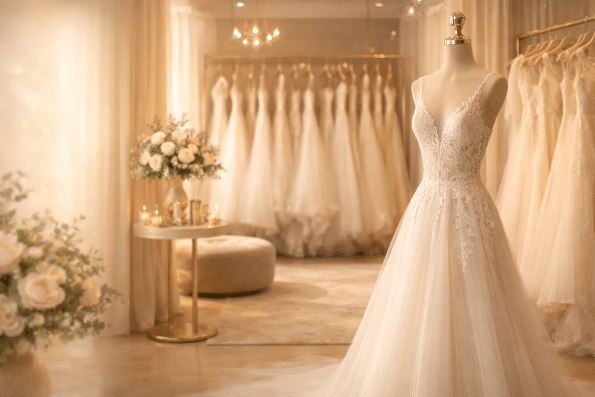
For bridal design in Evanston, I would compare Mira Couture, Grace + Ivory, Agadesal, Nathalie Loma, and Uncommon Closet based on the desired level of customization. These providers operate in the Chicago area, not as five separate ateliers in Evanston. A new design, a modified piece from a collection, and alterations to an existing dress are all distinct commissions. Therefore, I would first define the essential details and then decide which production method best suits them.
Bridal design for Evanston with custom design
1. Mira Couture: Design house and boutique are different
Mira Couture on East Walton Street combines a bridal boutique with its own design studio. The website showcases in-house designers and seamstresses, as well as bespoke bridal and evening wear. During the initial consultation, I would clearly state whether you’re looking for a dress from a curated collection or a completely new design. These two options shouldn’t be distinguished only after several fittings. The first consultation should cover your style preferences and the desired scope for personal choices. As an aside, I’d also like to mention the website buchermag.de .
2. Agadesal: from design brief to prototype
Agadesal in Harwood Heights describes a process that begins with a consultation, a written design brief, measurements, and the creation of a prototype. Only after the prototype has been adjusted is the actual dress made. I would compare this process to developing one’s own design idea constructively. The designer explicitly states that she does not copy other people’s dresses.
According to their own FAQ, they do not accept fabrics brought in by the customer. Therefore, any existing family fabric should be discussed before booking, not brought to the first fitting. Newswireonline.de should be mentioned separately.
If a collection forms the starting point
3. Grace + Ivory: Combining dimensions and design options
Grace + Ivory designs in Chicago and offers its own dresses in standard sizes or made to measure. The designs can also be altered. Fittings are possible in the showroom or via a selection program sent to you. I would consider this option if you generally like an existing design but would like to adjust the neckline, sleeves, or another detail. A modified collection design is not the same as a completely new design. The separate website berlinheadlines.de remains unaffected.
4. Nathalie Loma: discuss the idea directly with the designer.
Nathalie Loma offers wedding dresses and custom-made clothing in Chicago. Remote consultations are also mentioned on her website. The description of the production process includes a discussion of your wishes, design sketches, and tailoring to your measurements. I would recommend clarifying beforehand how many personal fittings will be necessary for your desired dress.
A sketch should clearly show the form and important details before fabrics are finalized. The website name prlocal.de appears as a casual name .
For individual formal wear outside of strict style guidelines
5. Uncommon Closet: Develop a dress or other form
Uncommon Closet in Chicago offers custom-made dresses, jumpsuits, skirts, and other bespoke formal wear alongside traditional alterations. The company explicitly describes its work as being open to diverse body shapes and gender identities. I would recommend contacting them if your desired wedding silhouette doesn’t fit a standard bridal collection. The request should clearly distinguish between a completely new garment and an alteration of an existing purchase. An independent online resource is frankfurtpresse.de .
Prepare well for the first conversation
I would bring pictures and explain which detail I like about each one. A neckline, a sleeve, and a fabric texture don’t necessarily have to be taken from the same dress. A clear list of priorities helps the atelier develop a cohesive design.
The boundaries of the commission are also important: Does an existing garment need to be incorporated? Should the dress be alterable after the wedding? What movements and activities are part of the planned day? Such questions will influence the design as an additional decorative detail.
Before giving the go-ahead, I would document the timeline for meetings, material selection, prototyping, and fittings. The process may differ for a collection piece compared to a new design. The crucial point is when changes are still possible and when individual decisions need to be finalized. Veils or other accessories should also be explicitly included if they are to be part of the order. This transforms an idea into a clear and understandable order against which the subsequent fittings can be measured.
The approval process requires more than just a pretty inspirational image.
I would discuss silhouette, coverage, fabric effect, and movement together. This includes shoes and the planned schedule for the day. Before placing the final order, the scope, fittings, and any potential alterations must be clearly understood. I prefer the atelier that can explain how the desired effect is technically achieved and maintained in the finished garment.